
Sickle Cell Trait Newborn Screening Education Toolkit
Timeline: August 2023 - December 2023
Team: Faculty Advisor, UX Research Fellow, UX Research Co-Op, Communication Design Co-Op, Industrial Design Co-Op
Role: UX Research Co-Op
A collaboration with Cincinnati Children's Hospital Division of Hematology to design an interactive, culturally sensitive toolkit that helps newborn screening coordinators educate families about sickle cell trait. Through research and co-creation with educators and parents, the project developed accessible materials and formats to improve understanding, confidence, and consistency in sickle cell counseling.


Strengthening Sickle Cell Trait Education
Creating a unified, culturally sensitive toolkit
Sickle Cell Trait (SCT) education has historically faced widespread challenges, including misinformation, inconsistent messaging, and a lack of standardized materials for families and healthcare providers. These gaps were especially harmful for communities with diverse cultural backgrounds and health equity needs, where effective communication and informed decision-making are critical. Recognizing this, the Ohio Department of Health’s Newborn Screening Program partnered with the Live Well team and Cincinnati Children’s Hospital Medical Center to develop a unified, easy-to-understand educational approach. The goal of the project was to create a comprehensive, culturally sensitive toolkit—including guidebooks, handouts, animations, and counseling SOPs—to improve SCT literacy and information retention. Ultimately, this work aims to empower Newborn Screening Coordinators and families with clear, accurate resources that can be replicated across states and adapted for diverse populations.
Actions and Methodologies
This project was executed in three meticulously planned phases:
Research Phase
1
2
Ideation Phase
Refinement & Testing
3
1
Research Phase
Understanding Needs, Barriers, and Opportunities

Identifying information gaps through interviews
Conducted 13 interviews with Newborn Screening Coordinators (NBSCs) and parents to understand their informational needs, misconceptions, and best practices.

Evaluating existing training and educational material
Collected hemoglobinopathy training content from Cincinnati Children's Hospital and reviewed existing educational models such as videos, websites, and physical kits. This was done to understand the current state, its pinpoints, and consider how the materials can be improved.
Mapping barriers and stakeholders within the SCT ecosystem for shared understanding with physicians
Developed stakeholder maps and journey maps to identify gaps, educational needs, and health equity barriers affecting diverse populations.


Visualizing the influence of misinformation, trust, and culture on family perception of SCT
The team used this map to understand how misinformation and cultural influences can affect the perception of sickle cell disease and sickle cell trait. This map begins with history of mistreatment within the healthcare system, going through the process of getting information from community resources rather than healthcare professionals.

Understanding the overlap of learning factors, social determinants of health, and outside influences on the spread of information
From the accumulation of research, we were able to identify stakeholders involved, as well as the socioeconomic factors that play a role in SCT education and perception. We found that there are several layers of social, cultural, and emotional factors that can affect the understanding of sickle cell trait.

Mapping the tiers of information to understand how to segment educational tools
Based on our interviews, we were able to model various tiers of sickle cell education. We found that a majority of the public was partially informed, while less were uninformed or very informed on the implications of sickle cell trait.

2
Ideation Phase
Designing Clear, Culturally Responsive SCT Education Tools
Exploring accessible ways to communicate complex information with stakeholders

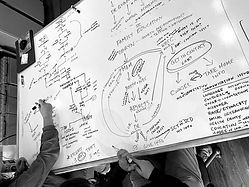
Brainstormed ways to present complex SCT information through simplified visuals, animations, and multilingual digital options. The team sketched out thumbnails of important concepts to share with the team. The sponsors and stakeholders were then able to make changes, and rearrange ideas for the maximum impact.
Prototyping culturally sensitive educational materials
Created prototypes of guidebooks, videos, and hand outs, focusing on clarity and cultural appropriateness. Throughout this process, the team continually mapped the order of information to ensure this content is shared effectively.

Validating concepts through stakeholder feedback
Conducted 8 validation sessions involving NBSCs, parents, and team members, refining content based on feedback for accuracy, clarity, and engagement.


3
Refinement Phase
Strengthening Accuracy, Consistency, and Usability
Validating content with clinical and NBSC experts
Ensured content accuracy by collaborating with CCHMC trainers and NBSCs.
Visual & content refinement
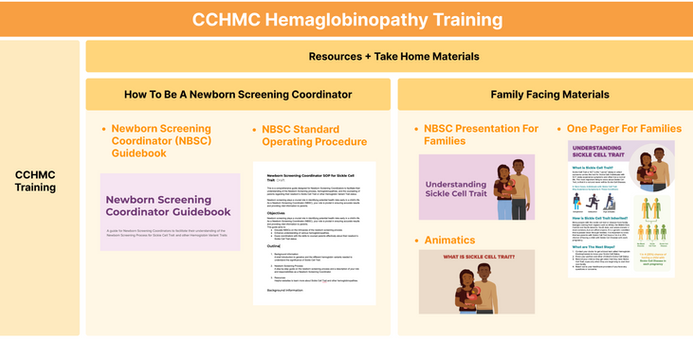
Developed consistent and visually appealing materials, to facilitate better understanding and retention.


Outcomes and Impact
Standardized materials
Created culturally sensitive, easy-to-understand SCT educational tools, including videos, handouts, and SOPs, for consistent use across newborn screening centers.
Empowered stakeholders
Equipped providers with accurate, reliable content to support clear counseling and stronger family decision-making.
Broader awareness
Advanced public health understanding of sickle cell trait and its role in family planning.